Neonvoramila
Peak Archive
Peak Archive
Couldn't load pickup availability
- 📄 Digital file available after purchase
- 📚 Long-term availability
- 🔒 Secure checkout
- 📅 Content updated in 2026
Self-paced learning overview
1. Problem Statement
Organizing complex digital communication requires combining strategic objectives, research materials, editorial workflows, and analytical observations into a connected system. Even detailed content strategies may contain inconsistencies between thematic directions, informational messages, and evaluation criteria. Changes in audience interests, information environments, and editorial priorities require periodic reviews of previously prepared materials. Without documented governance guidelines, coordinating communication decisions, reviewing information quality, and maintaining publication consistency can become challenging. Under these circumstances, understanding relationships between research, planning, content development, and digital interaction analysis becomes an important part of communication management.
2. Solution
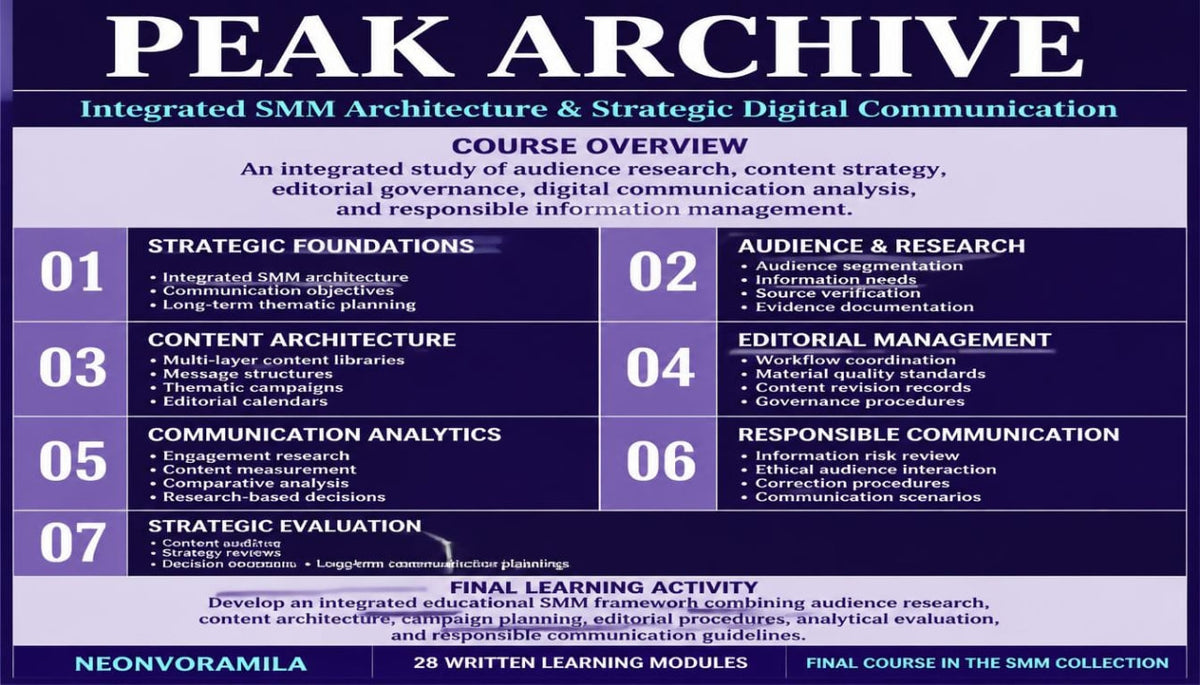
Peak Archive introduces an integrated approach to studying strategic SMM management through advanced written modules, educational diagrams, analytical examples, and practical assignments. The course explains how to combine audience research, thematic planning, editorial procedures, and analytical indicators within a coordinated digital communication structure. Dedicated sections explore content governance guidelines, information risk evaluation, and alternative communication scenario preparation. Practical exercises examine complex editorial situations, strategic decision documentation, and the development of material review criteria. The final educational project involves preparing an integrated SMM system containing a research framework, content architecture, editorial calendar, analytical procedures, and responsible communication guidelines.
3. What's Inside
Module 1: Integrated SMM Architecture
Explore principles of developing an integrated SMM system connecting strategic planning, editorial processes, and analytical research.
Module 2: Strategic Communication Foundations
Examine methods of defining long-term informational objectives and establishing thematic priorities for digital communication.
Module 3: Advanced Audience Research
Study detailed approaches to researching audience segments, information needs, and communication contexts.
Module 4: Content Strategy Architecture
Learn how to develop multi-layer content strategies containing thematic directions, categories, and connected messages.
Module 5: Communication Objective Mapping
Explore methods of mapping relationships between informational objectives, audience groups, and publication content.
Module 6: Content Research and Evidence
Examine principles of organizing information sources, verifying statements, and documenting research materials.
Module 7: Editorial Governance Systems
Study approaches to establishing editorial guidelines, assigning responsibilities, and organizing content review procedures.
Module 8: Multi-Layer Content Libraries
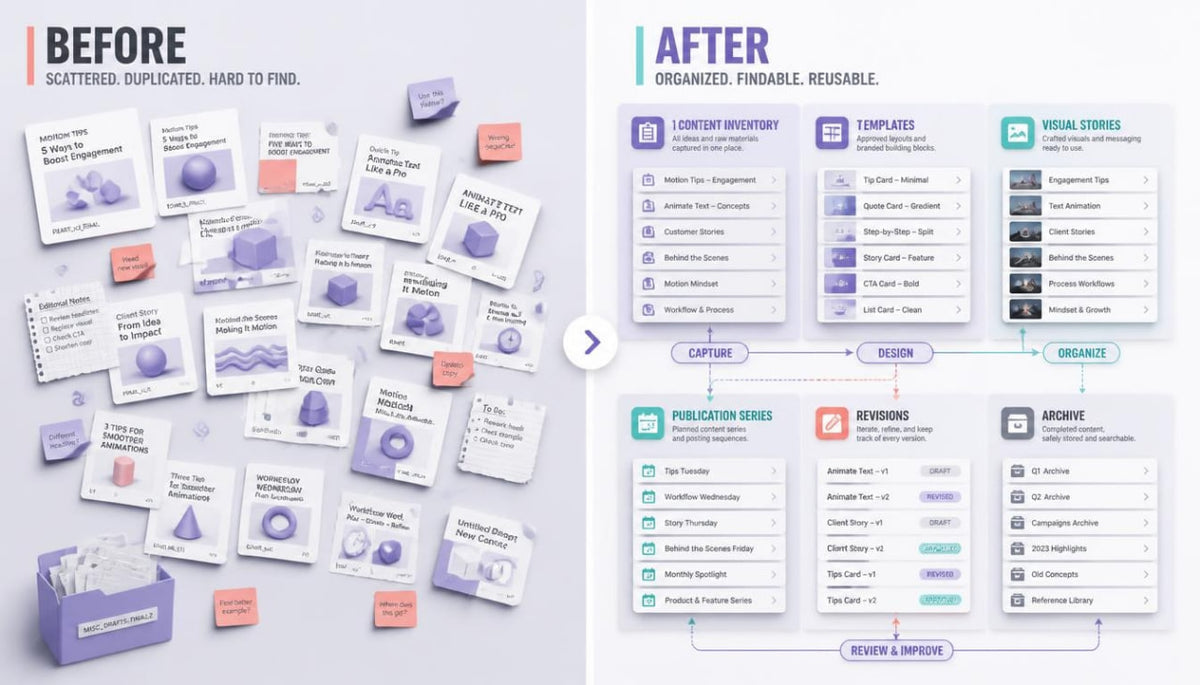
Learn how to develop connected content libraries containing thematic categories, material versions, and editorial records.
Module 9: Advanced Message Architecture
Examine principles of organizing primary, supporting, and explanatory messages for complex communication subjects.
Module 10: Integrated Editorial Planning
Explore methods of coordinating thematic campaigns, publication calendars, and editorial assignments.
Module 11: Multi-Format Content Coordination
Learn how to plan informational subjects across several formats while maintaining a consistent content structure.
Module 12: Communication Sequence Design
Study the development of connected informational messages across different stages of thematic communication.
Module 13: Audience Engagement Research
Examine methods of studying reactions, comments, questions, and other observable characteristics of digital interaction.
Module 14: Advanced Content Analytics
Explore principles of comparative publication analysis, metric classification, and analytical interpretation.
Module 15: Content Measurement Design
Learn how to prepare measurement frameworks for examining thematic campaigns and editorial materials.
Module 16: Research-Based Editorial Decisions
Study methods of formulating editorial decisions using documented observations and information sources.
Module 17: Communication Scenario Modeling
Explore approaches to developing alternative communication scenarios for different informational circumstances.
Module 18: Strategic Content Auditing
Learn how to conduct an educational digital content audit using criteria related to accuracy, relevance, structure, and thematic alignment.
Module 19: Communication Risk Review
Examine principles of identifying information, editorial, and reputational risks during publication planning.
Module 20: Responsible Audience Interaction
Study principles of constructive communication, privacy considerations, and appropriate responses to audience questions.
Module 21: Information Correction Framework
Explore methods of preparing corrections, explaining editorial changes, and maintaining records of message updates.
Module 22: Editorial Workflow Coordination
Learn how to develop workflow diagrams connecting content research, preparation, review, and revision stages.
Module 23: Content Quality Standards
Examine the development of internal criteria for evaluating factual accuracy, readability, and informational consistency.
Module 24: Strategic Documentation Framework
Study approaches to organizing strategic plans, analytical reports, editorial guidelines, and research notes.
Module 25: Long-Term Communication Planning
Explore methods of preparing long-term thematic plans with periodic reviews of informational priorities.
Module 26: Integrated Strategy Review
Learn how to conduct a comprehensive SMM strategy review incorporating audience research, editorial structures, and analytical observations.
Module 27: Communication Governance Framework
Examine principles of combining strategic guidelines, editorial procedures, information review, and responsible content management.
Module 28: Peak Archive Final Strategy Studio
Prepare a final educational project involving an integrated SMM system with content architecture, communication scenarios, an editorial plan, and an analytical framework.
4. Who Is This For?
✅ This course may suit you if you:
- Already understand SMM fundamentals, content strategy, and digital analytics.
- Want to organize your knowledge of integrated digital communication management.
- Are interested in developing multi-layer content structures.
- Would like to examine strategic thematic campaign planning in greater detail.
- Want to study editorial governance and information management principles.
- Are interested in connecting analytical observations with strategic decisions.
- Would like to explore ethical digital communication and information verification.
- Prefer written educational materials, structured diagrams, and practical assignments.
❌ This course may not match your needs if you:
- Are beginning to explore introductory SMM terminology.
- Are looking for a short introductory guide to writing individual publications.
- Need a completed communication strategy delivered as a separate service.
- Expect individual management of your digital campaigns.
- Are searching for materials devoted entirely to visual content creation.
- Require technical instructions for configuring advertising systems.
- Prefer personalized consultations rather than independent study.
5. What You'll Learn
- Developing integrated SMM strategies.
- Conducting detailed audience research.
- Designing content architectures.
- Coordinating editorial workflows.
- Analyzing digital communication.
- Evaluating information risks.
- Documenting strategic decisions.
- Planning thematic campaigns.
- Conducting content audits.
- Developing integrated SMM frameworks.
6. Refund Terms
Refund requests for Peak Archive may be submitted within 14 days after purchase. Request handling and applicable conditions for digital educational materials follow the store's published refund policy and applicable law.
7. Certificates & Credentials
Peak Archive: After completing Peak Archive, you will receive a Neonvoramila PDF certificate reflecting your study of strategic SMM planning and analytical review.
1. What format do Neonvoramila courses follow?
1. What format do Neonvoramila courses follow?
Neonvoramila courses are presented as written educational materials organized into topics and modules. They contain explanations, subject-specific examples, and exercises for independent study. The contents of each course are described separately.
2. Do I need previous SMM experience?
2. Do I need previous SMM experience?
The Neonvoramila collection covers introductory and advanced digital communication topics. Early courses introduce foundational concepts, while later materials examine more detailed approaches to content planning, audience research, and communication analysis. We recommend reviewing the module descriptions before selecting a course.
3. How do the course tiers differ?
3. How do the course tiers differ?
Each tier focuses on a defined range of subjects and follows its own learning module structure. The courses are arranged from foundational concepts to more detailed SMM studies. The curriculum descriptions explain the topics covered in each set of educational materials.
Share