Neonvoramila
Free Map
Free Map
Couldn't load pickup availability
- 📄 Digital file available after purchase
- 📚 Long-term availability
- 🔒 Secure checkout
- 📅 Content updated in 2026
Self-paced learning overview
1. Problem Statement
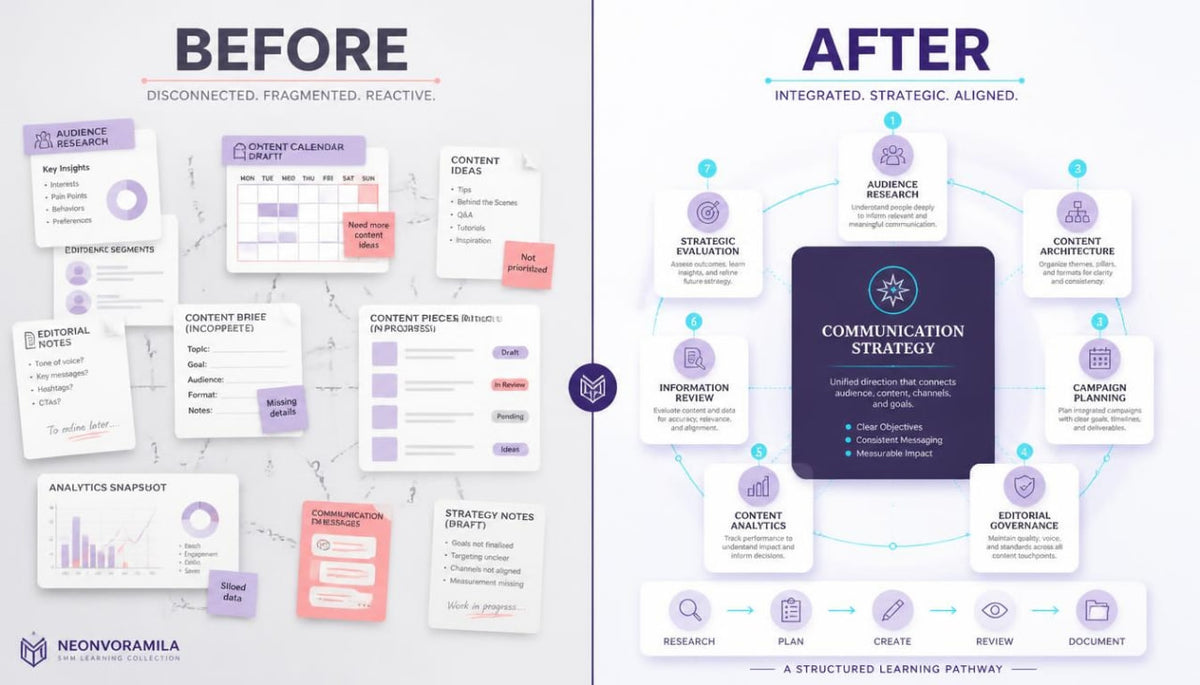
When beginning to study SMM, information can often appear as a collection of separate recommendations without a clear underlying structure. Publication ideas may emerge without a defined subject, communication purpose, or understanding of audience interests. Without an editorial plan, content can be developed without consistency or a logical connection between individual materials. Beginners may also find it challenging to distinguish engagement metrics and identify which observations are worth recording. Without organized foundational knowledge, the individual elements of SMM can remain disconnected, making independent study more complicated.
2. Solution
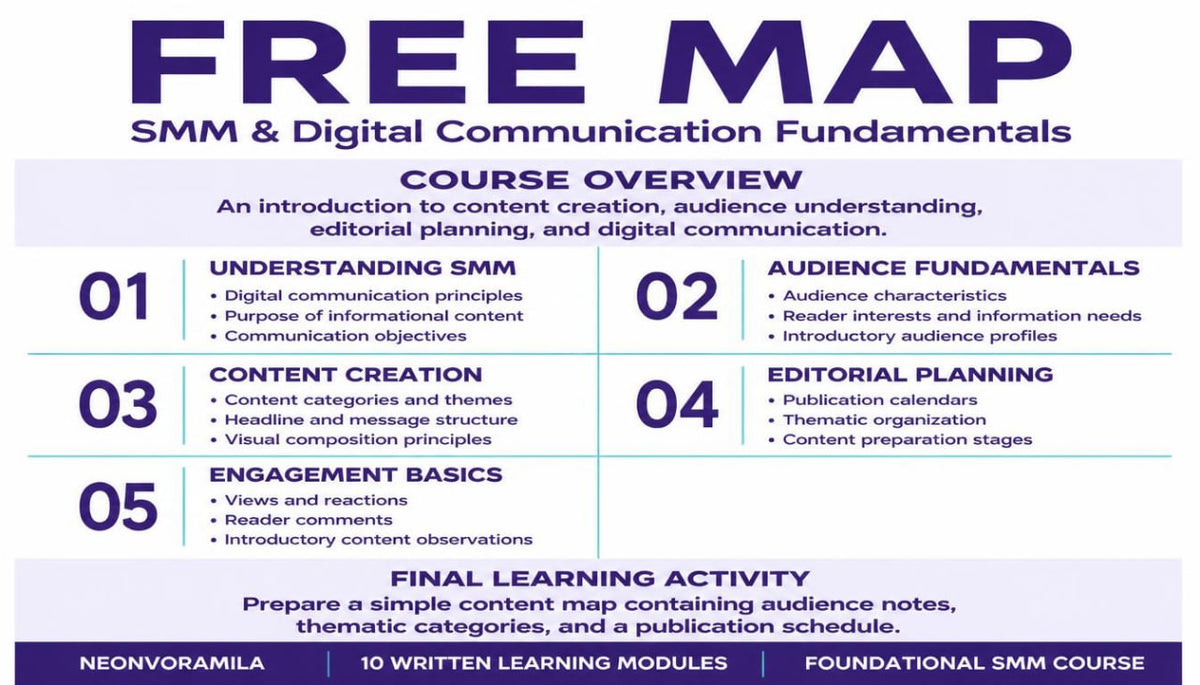
Free Map introduces the main components of SMM through structured theoretical explanations and practical examples. The course begins by examining digital communication principles and defining the purpose of different content types. The following sections explore audience research, content categories, and the development of understandable messages. Dedicated exercises examine how to prepare a simple editorial calendar and record observations about publication activity. In the final section, readers bring the covered concepts together into a small educational content plan.
3. What's Inside
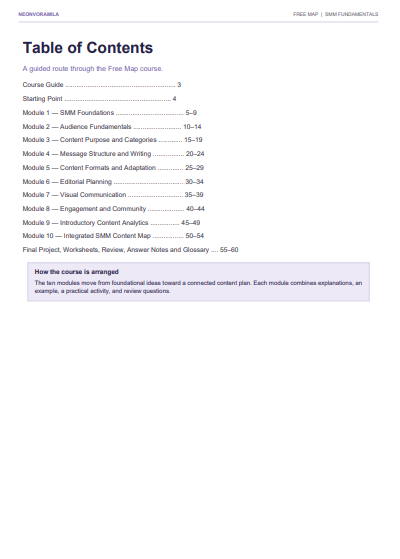
Module 1: Introduction to SMM
Explore the meaning of SMM, its main components, and the role of content in digital communication.
Module 2: Communication Objectives
Study how to define the purpose of individual messages and establish learning objectives for content planning.
Module 3: Audience Fundamentals
Examine basic audience characteristics, interests, information needs, and patterns of interaction with content.
Module 4: Content Categories
Learn how to organize publication ideas into subject-based categories and define the purpose of different content types.
Module 5: Writing Digital Messages
Explore short-message structure, headline development, and principles of organizing written ideas logically.
Module 6: Visual Content Basics
Study introductory visual composition principles, element arrangement, and relationships between text and imagery.
Module 7: Editorial Calendar
Examine how to prepare a simple publication calendar containing subjects, dates, and brief content descriptions.
Module 8: Engagement Fundamentals
Learn to distinguish views, reactions, and other introductory indicators of publication engagement.
Module 9: Content Review
Study how to organize publication observations and prepare written notes for further analysis.
Module 10: First Content Map
Bring the covered concepts together in an educational content plan with thematic categories, an audience description, and a publication schedule.
4. Who Is This For?
✅ This course may suit you if you:
- Are beginning to explore SMM and want to understand its foundational concepts.
- Are interested in creating thematic content for digital environments.
- Want to learn how to organize publication ideas using a simple editorial plan.
- Would like to understand the principles of audience identification and message development.
- Prefer independent reading, written explanations, and practical learning exercises.
❌ This course may not match your needs if you:
- Are looking for advanced methods of analyzing extensive datasets.
- Need detailed studies of complex advertising systems and multi-component campaigns.
- Expect individual guidance or personalized reviews of your own projects.
- Already understand foundational SMM terminology and are seeking specialized learning subjects.
5. What You'll Learn
The course materials introduce the following subjects and practical activities:
- Digital communication fundamentals: Examine the role of SMM in sharing information and engaging with audiences.
- Audience identification: Prepare a basic description of a reader group based on its informational interests.
- Content organization: Divide ideas into thematic categories, each with a defined communication purpose.
- Message development: Draft short written messages with a headline, central idea, and logical structure.
- Visual organization: Examine composition, readability, and relationships between written and graphic elements.
- Editorial planning: Prepare an educational publication calendar covering a selected period.
- Introductory indicators: Understand the distinctions between views, reactions, and other forms of interaction.
- Content analysis: Record observations about publications and develop questions for further examination.
- Final learning exercise: Prepare an educational content map that brings together the topics discussed throughout the course.
6. Refund Terms
This course is free of charge, so a 14-day refund period does not apply. For paid courses, refund conditions and time frames are determined by the store's published refund policy.
7. Certificates & Credentials
Free Map: Upon completing the Free Map course, you will receive a Neonvoramila PDF certificate recognizing your completion of the introductory SMM learning materials.
1. What format do Neonvoramila courses follow?
1. What format do Neonvoramila courses follow?
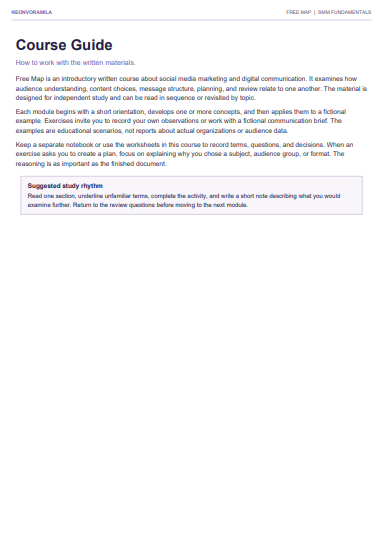
Neonvoramila courses are presented as written educational materials organized into topics and modules. They contain explanations, subject-specific examples, and exercises for independent study. The contents of each course are described separately.
2. Do I need previous SMM experience?
2. Do I need previous SMM experience?
The Neonvoramila collection covers introductory and advanced digital communication topics. Early courses introduce foundational concepts, while later materials examine more detailed approaches to content planning, audience research, and communication analysis. We recommend reviewing the module descriptions before selecting a course.
3. How do the course tiers differ?
3. How do the course tiers differ?
Each tier focuses on a defined range of subjects and follows its own learning module structure. The courses are arranged from foundational concepts to more detailed SMM studies. The curriculum descriptions explain the topics covered in each set of educational materials.
Share