Neonvoramila
Echo Deck
Echo Deck
Couldn't load pickup availability
- 📄 Digital file available after purchase
- 📚 Long-term availability
- 🔒 Secure checkout
- 📅 Content updated in 2026
Self-paced learning overview
1. Problem Statement
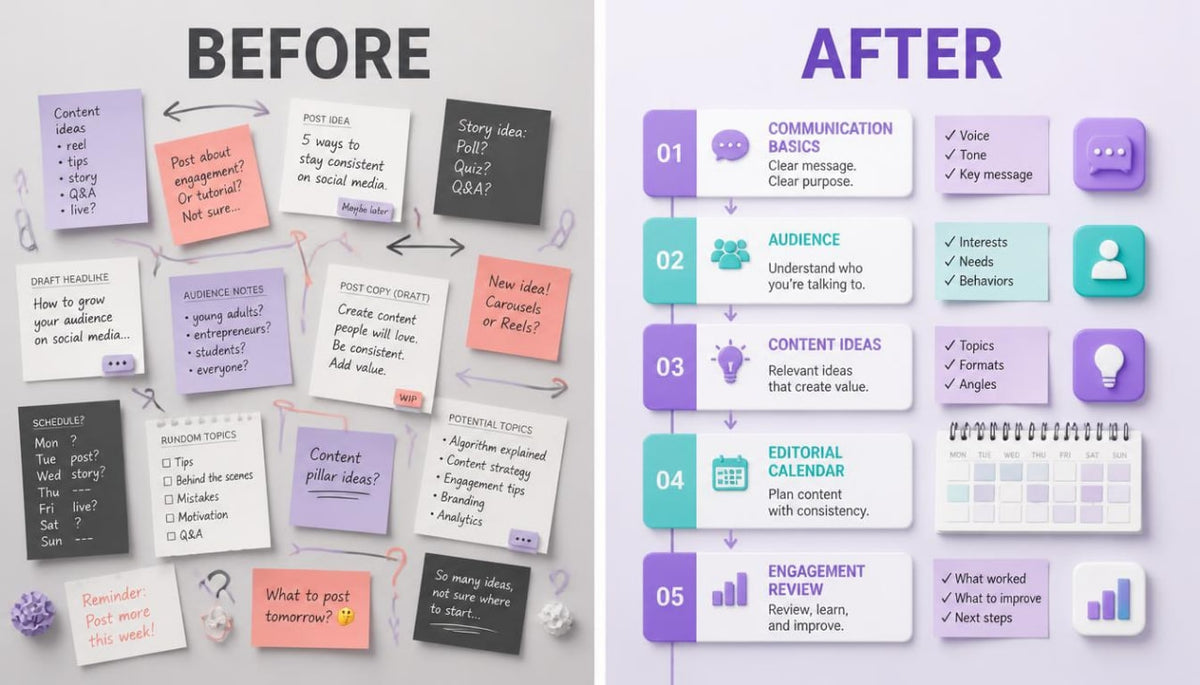
When creating digital content, authors often rely on assumptions about which subjects may interest their audience. Even a carefully prepared editorial plan may overlook differences in the information needs of individual reader groups. Comments, questions, and reactions can provide useful observations, but without systematic organization, they are difficult to incorporate into future content planning. The absence of defined audience research criteria also makes it challenging to compare thematic directions and methods of presenting information. As a result, content decisions may sometimes be made without a sufficient understanding of the context in which people interact with messages.
2. Solution
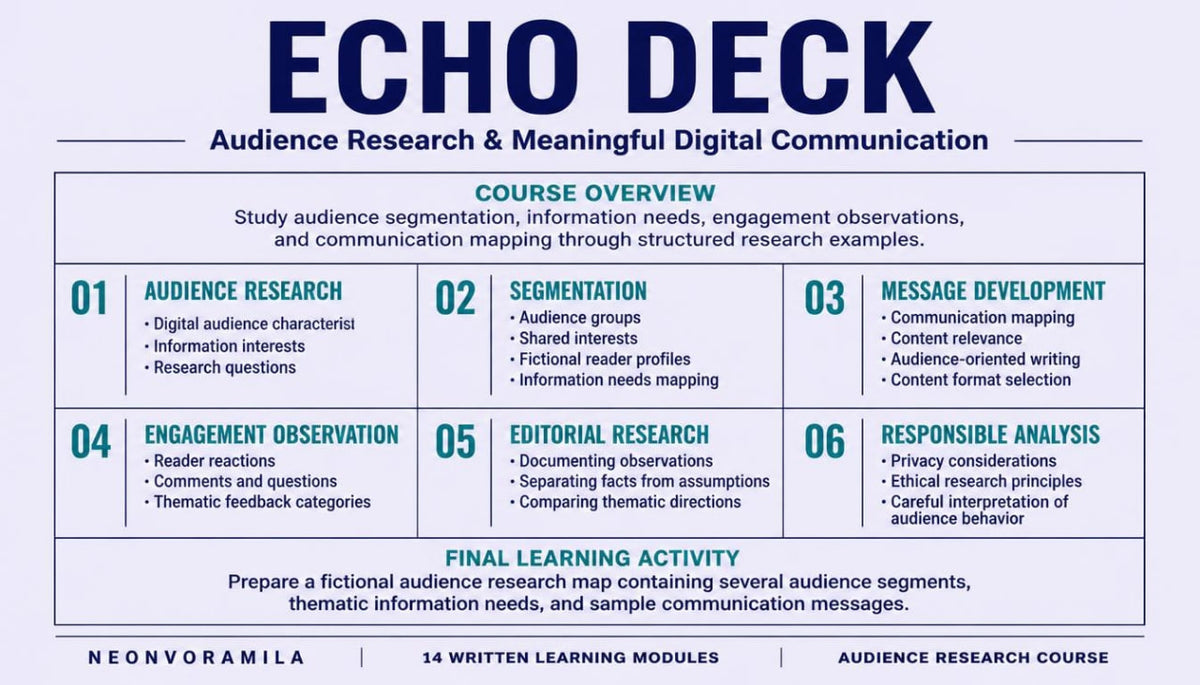
Echo Deck introduces audience research methods through written explanations, analytical examples, and educational exercises. The course examines reader segmentation, information needs documentation, and the creation of thematic communication maps. Dedicated modules explore questions, comments, engagement patterns, and the identification of recurring subjects within recorded observations. Learning assignments demonstrate how to connect audience characteristics with message formats, editorial styles, and publication subjects. The final project combines a fictional audience study, a thematic content structure, and an educational communication plan into one organized framework.
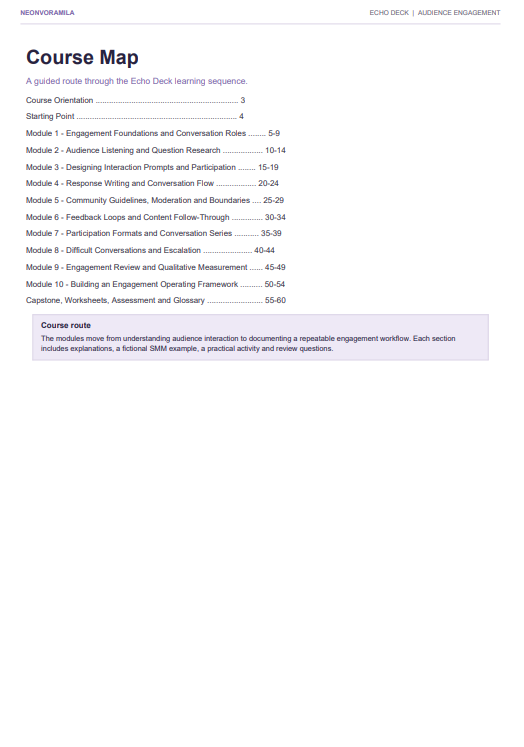
3. What's Inside
Module 1: Understanding Digital Audiences
Examine the main characteristics of digital audiences and factors that influence how informational messages are interpreted.
Module 2: Audience Research Principles
Explore methods of collecting and organizing observations about reader interests and informational needs.
Module 3: Audience Segmentation
Learn how to divide a fictional audience into groups based on interests, information needs, and content interaction patterns.
Module 4: Information Needs Mapping
Study how to create thematic maps connecting audience questions with relevant informational materials.
Module 5: Audience Profiles
Examine the structure of an educational reader profile containing interests, questions, and communication characteristics.
Module 6: Content Relevance Analysis
Learn how to evaluate the relationship between a publication subject and an identified informational need.
Module 7: Communication Message Mapping
Explore principles of preparing messages for different thematic groups and communication situations.
Module 8: Engagement Signals
Examine distinctions between views, reactions, comments, and other observable indicators of audience interaction.
Module 9: Comment and Question Analysis
Learn how to organize questions and comments into thematic categories for further editorial review.
Module 10: Content Format Selection
Study criteria for selecting written, visual, and combined content formats according to the nature of the information.
Module 11: Editorial Decision Framework
Explore methods of documenting editorial decisions based on identified topics, observations, and learning objectives.
Module 12: Audience Feedback Documentation
Learn how to prepare organized records of audience reactions while distinguishing factual observations from assumptions.
Module 13: Content Research Review
Examine approaches to comparing thematic directions and reviewing content plans using collected information.
Module 14: Echo Deck Audience Studio
Prepare an educational audience map, a structured collection of information needs, and sample messages for several thematic groups.
4. Who Is This For?
✅ This course may suit you if you:
- Already understand foundational SMM concepts and want to explore digital audience behavior in greater detail.
- Are interested in methods of researching reader information needs and thematic interests.
- Want to learn how to prepare educational audience profiles and communication maps.
- Would like to organize comments, questions, and reactions for further analysis.
- Are interested in understanding relationships between audience characteristics and content subjects.
- Prefer written explanations, analytical examples, and independent learning exercises.
❌ This course may not match your needs if you:
- Are looking only for an introductory explanation of basic SMM terminology.
- Need a technical manual for configuring advertising campaigns.
- Expect an actual audience research service rather than independently studying research methods.
- Are seeking complex mathematical models for predicting behavior across extensive user groups.
- Prefer personalized consultations instead of written educational materials.
5. What You'll Learn
- Digital Audience Research
- Audience Segmentation
- Audience Profile Development
- Communication Mapping
- Understanding Engagement Indicators
- Feedback and Question Analysis
- Content Format Selection
- Editorial Decision Documentation
- Ethical Research Principles
- Final Educational Project
6. Refund Terms
Refund requests for Echo Deck may be submitted within 14 days of purchase. Request eligibility and applicable conditions, including those relating to digital educational materials, follow the store's published refund policy and applicable law.
7. Certificates & Credentials
Echo Deck: Upon completing Echo Deck, we will provide a digital PDF certificate reflecting your study of audience engagement and community communication.
1. What format do Neonvoramila courses follow?
1. What format do Neonvoramila courses follow?
Neonvoramila courses are presented as written educational materials organized into topics and modules. They contain explanations, subject-specific examples, and exercises for independent study. The contents of each course are described separately.
2. Do I need previous SMM experience?
2. Do I need previous SMM experience?
The Neonvoramila collection covers introductory and advanced digital communication topics. Early courses introduce foundational concepts, while later materials examine more detailed approaches to content planning, audience research, and communication analysis. We recommend reviewing the module descriptions before selecting a course.
3. How do the course tiers differ?
3. How do the course tiers differ?
Each tier focuses on a defined range of subjects and follows its own learning module structure. The courses are arranged from foundational concepts to more detailed SMM studies. The curriculum descriptions explain the topics covered in each set of educational materials.
Share